It is twenty past eight, the cloakroom is crowded, and a two-year-old is sitting on a low bench with one shoe on and the other upside down in a puddle of coat sleeves. A practitioner kneels to help, then turns to the next child, and the next. For toddlers who attend nursery or a childminder, this scene repeats several times a day, and it changes what a good pair of barefoot shoes for kids needs to do. The shoe is no longer something a parent fits carefully on a quiet Saturday. It is put on, taken off and worn by a child surrounded by other children, often under the eye of an adult who has a dozen other feet to think about.
Shoes are handled by many hands
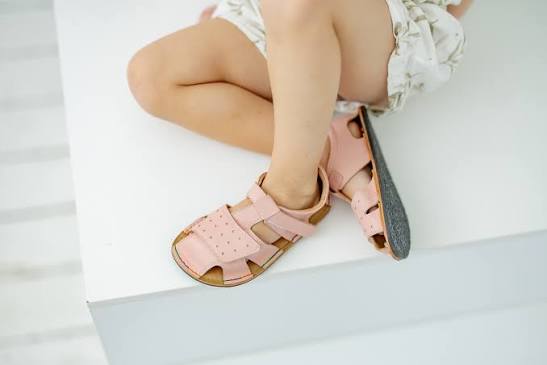
At home, a parent can spend a minute easing a heel into place and checking that the toes are not curled. At nursery, the same job is done quickly, sometimes by the child alone. That makes the closure the first thing to assess. Hook and loop straps, common on toddler models, open wide and close in one movement, and a child can learn to press them down long before mastering laces. Models such as the Younger Contact 4.0 and Junior Contact 4.0 close this way, and the Winter Mini Contact combines a strap with laces to hold a taller boot firmly around the ankle.
The opening matters as much as the fastening. A wide entry lets the foot slide in without the tongue folding under the toes, which would otherwise leave a ridge under the toes that a child may never mention but will feel all morning. When choosing a pair, it is worth watching your child try to put it on unaided. If they cannot manage it at home, they will not manage it in a busy cloakroom.
Indoors, outdoors and everything in between
Many settings ask for a separate pair of indoor shoes, while others let children play barefoot or in socks on soft flooring and put shoes on only for the garden. It is worth asking about the routine before buying, because it decides what the outdoor pair must cope with. A shoe that only goes on for the garden is worn in short bursts, often on wet grass, bark chippings or a damp rubber play surface. Grip and how easily the upper wipes clean count for more than warmth.
Where children wear the same shoes all day, inside and out, breathability and weight come forward. A heavy lined boot that feels right on the walk in can make feet hot and sweaty by mid morning in a heated room. For that reason some families keep a lighter everyday shoe for nursery and save the warmer winter boot for weekends and longer walks. The range linked above is described as covering everyday wear, play and outdoor use, and its sizes currently run from six to twelve months up to about three years, which is the span when nursery shoes change most often.
Fit checks that do not depend on the child
A toddler will rarely say a shoe is too small. They may simply take it off, refuse to walk to the garden, or trip more often than usual. Since practitioners cannot check every pair every day, the regular fit check falls to whoever does the morning drop off. The simplest version takes seconds: with the child standing, press gently at the front of the shoe to feel where the longest toe sits, and look at whether the upper bulges at the sides.
Naturcontact’s guidance is to measure foot length in centimetres against the size chart and to leave a small growth allowance while keeping the shoe stable. At nursery the second half of that sentence carries weight. A shoe that is too roomy slips at the heel, and a child running between activities will kick it off or catch the toe on steps. Stability is what lets a minimalist shoe feel like nothing on the foot, so a growth margin that turns into a sloppy fit defeats the purpose.
Labels, spares and the wet afternoon
Nurseries are full of near identical shoes, and a pair of navy toddler shoes left under a bench can easily go home on the wrong child. Writing a name inside the tongue or on the insole with a fabric marker saves a lot of confusion. It also helps to ask staff where shoes are kept, so they are not left wet against a radiator.
That last point is about more than tidiness. Heat dries a damp shoe quickly but can stiffen synthetic uppers and weaken adhesives over time. The care advice on the brand’s own site is to wipe shoes with a damp cloth and let them air dry at room temperature. For families who know their child’s setting spends most afternoons outdoors, a second pair at home means wet shoes can dry slowly overnight while the dry pair goes back in the bag.
A spare pair of socks in the bag solves the most common winter problem, which is not a wet shoe but a wet foot after a puddle has come over the collar.
Back on the bench in the cloakroom, the two-year-old has found the second shoe, pulled the strap wide, and pushed a foot inside without help. The practitioner glances over, sees the strap pressed flat, and moves on.