
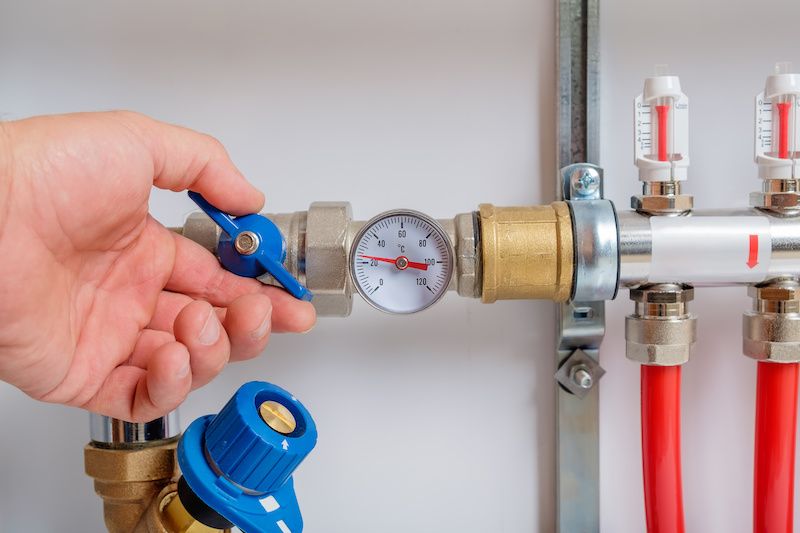
Water pressure complaints are often dismissed until they start interrupting daily use. A sink weakens when a shower turns on, a toilet refill changes the kitchen flow, or an upper-floor fixture suddenly loses force for no obvious reason. Many property owners assume this is simply how busy plumbing systems behave, but pressure fluctuations usually indicate a specific issue in the supply path, fixture arrangement, or control components. For property managers, facility teams, and building owners, the practical question is not whether the pressure feels inconsistent. It is how technicians determine where the inconsistency begins and what causes it to spread across multiple fixtures.
The Pattern Matters Before The Repair
- Good Diagnosis Starts With Usage
Technicians do not begin with pipe replacement or immediate assumptions about municipal supply. They start by identifying the pressure pattern. A system that drops pressure only during simultaneous fixture use suggests one type of constraint. At the same time, random surges and dips may indicate a regulator problem, partial blockage, or unstable supply conditions. The timing of the complaint matters because pressure behavior under load tells a very different story than pressure behavior at rest.
That first distinction is more important than many owners realize. Search terms like ac repair near me reflect how often people begin with symptom-based service decisions, but plumbing pressure problems reward a more disciplined approach. A technician needs to know which fixtures are involved, whether the issue affects hot water, cold water, or both, and whether the fluctuation appears on one branch or throughout the building. Those details shape the entire diagnostic path.
- Static And Dynamic Pressure Reveal Differences
One of the first technical steps is to compare static and dynamic pressure. Static pressure is the pressure in the system when no fixtures are running. Dynamic pressure occurs once water begins moving through the piping. A building may show acceptable static pressure on a gauge and still perform poorly under real demand if the system cannot maintain flow when multiple fixtures open simultaneously.
This is where technicians move from a general complaint to a measurable condition. Suppose static pressure is normal but drops sharply during use; that often points to restriction, undersized piping, a failing pressure regulator, or a supply limitation that only appears under load. If both static and dynamic pressure are low, the issue may begin closer to the main supply, meter, or incoming service line. Measuring both conditions gives the technician a more reliable map of the problem than fixture complaints alone ever could.
- Fixture Distribution Helps Narrow The Cause
Pressure fluctuations across several fixtures do not necessarily mean the entire plumbing system is failing uniformly. Technicians compare where the issue appears and how it spreads. If upper-floor bathrooms are affected while first-floor fixtures remain relatively stable, the problem may involve loss of elevation, branch sizing issues, or localized restrictions. If one side of the property performs poorly while another remains steady, the issue may be isolated to a particular distribution path.
This location-based approach matters because multi-fixture systems often contain layered piping arrangements that do not fail uniformly. A technician may run fixtures in sequence, then in combination, watching how pressure changes at different points in the building. That process helps determine whether the pressure drop occurs at the main entry point, along a trunk line, through a branch line, or within individual fixture supply components. Without that comparison, it is too easy to mistake a localized issue for a full-building one.
- Pressure Regulators Commonly Drift Out
In buildings equipped with pressure-reducing valves, fluctuating pressure often leads technicians toward the regulator. A pressure regulator that is wearing out or reacting inconsistently can create surges, drops, or unstable delivery throughout the system. Owners may describe the pressure as “fine sometimes” and weak at other times, which is a common clue that the regulator is no longer maintaining steady downstream conditions.
Technicians test around the regulator to see whether the pressure entering the building remains stable while the pressure after the device varies unpredictably. They also observe how the regulator behaves during fixture demand changes. If the downstream pressure reacts too aggressively or fails to recover properly, the regulator becomes a strong suspect. This is a common diagnosis because regulator issues can affect many fixtures at once without leaving obvious visible signs elsewhere in the plumbing system.
Accurate Diagnosis Prevents Wasteful Repairs
Pressure fluctuations in multi-fixture plumbing systems are rarely solved by guessing. They can originate from regulator drift, partial blockages, poor branch distribution, hot-side restrictions, fixture valve problems, or a supply limitation that only shows up under real demand. Good technicians diagnose these issues by first studying the pattern, then measuring pressure behavior, isolating affected zones, and testing the system under conditions that reflect actual use.
For property managers and building owners, that process matters because pressure complaints can otherwise lead to expensive but ineffective decisions. Replacing fixtures will not solve a failing regulator. Replacing a regulator will not correct a corroded branch line. Strong diagnosis turns an irritating comfort issue into a specific plumbing problem with a practical repair path. That is what restores consistency across multiple fixtures and prevents the same complaint from resurfacing every time demand increases.


