Artificial intelligence is changing the way organizations approach cybersecurity. From identifying suspicious activity to automating routine security tasks, AI can help teams work faster and process far more information than would be practical manually.
However, the same technology is also available to cybercriminals. Attackers can use AI to improve phishing campaigns, automate elements of attacks, and make fraudulent communications more convincing.
As a result, businesses need to consider both the defensive opportunities and the new risks associated with AI.
Faster Threat Detection
Modern organizations generate enormous amounts of security data across networks, applications, cloud platforms, and endpoints. Reviewing this information manually can be difficult, particularly for smaller security teams.
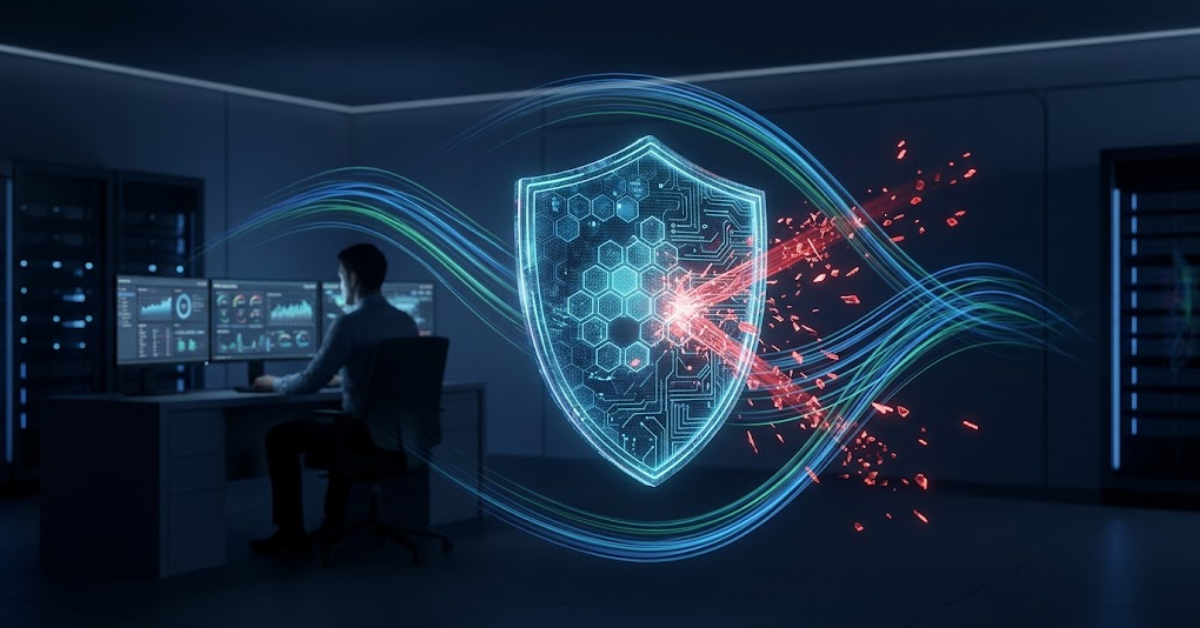
AI-powered systems can analyze large volumes of activity and highlight unusual patterns that may indicate a security incident. Instead of relying exclusively on predetermined rules, machine learning can help identify behavior that differs from an organization’s normal baseline.
Security teams can then investigate higher-priority alerts rather than spending as much time reviewing routine activity.
Security Operations Are Becoming More Automated
Automation is another important way AI is influencing cybersecurity. Tasks such as alert classification, log analysis, and initial incident investigation can increasingly be supported by intelligent systems.
This development does not remove the need for security professionals. Instead, it can reduce repetitive work and give analysts more time for activities requiring judgment, investigation, and strategic decision-making.
Centralized monitoring remains important within this environment. Organizations assessing their monitoring capabilities may explore different SIEM tools to understand how security information can be collected, analyzed, and managed across their infrastructure.
Attackers Are Using AI Too
AI creates opportunities for defenders, but cybercriminals can benefit from many of the same capabilities.
One clear example is social engineering. Generative AI can produce polished emails and messages quickly, potentially making phishing attempts harder to identify through spelling mistakes or poor writing alone. Attackers may also use automation to research targets, adapt malicious content, or search for weaknesses more efficiently.
Deepfake technology creates another concern. Artificially generated voices, images, and videos can potentially be used to impersonate executives, employees, or trusted contacts.
AI Creates New Security Risks
Businesses must also secure the AI systems they introduce. Employees may accidentally provide sensitive company information to public AI platforms, while poorly controlled AI applications can create additional routes to valuable business data.
Organizations therefore need clear policies covering which AI services employees can use, what information can be entered, and how AI-generated outputs should be handled.
Access controls, employee education, and ongoing monitoring should develop alongside AI adoption rather than being introduced after problems occur.
Human Expertise Still Matters
AI can process data extremely quickly, but cybersecurity decisions frequently require context. An unusual login may represent an attacker, for example, or simply an employee traveling overseas.
Experienced professionals are needed to interpret findings, investigate incidents, and decide on an appropriate response. AI is therefore more useful as an extension of human expertise than as a complete replacement for security teams.
Preparing for an AI-Driven Security Environment
AI is accelerating both sides of cybersecurity. Businesses can use it to detect threats, automate analysis, and respond more efficiently, while attackers can use it to increase the speed and sophistication of their activities.
Organizations that combine intelligent technology with strong security fundamentals, appropriate oversight, and skilled professionals will be better positioned to adapt as the cybersecurity landscape continues to evolve.