

Septic tanks are one of those systems most people rarely think about until they need one. Yet for millions of properties, particularly in rural or off-grid locations, they are absolutely essential. Without them, safe and effective wastewater management simply wouldn’t be possible. Far from being outdated, septic tanks remain a practical, reliable, and often environmentally responsible solution for handling sewage where mains drainage isn’t available.
Providing Essential Wastewater Treatment
At their core, septic tanks exist to safely manage and treat household wastewater. Every time you use a sink, shower, or toilet, waste needs to go somewhere, and it must be handled in a way that protects both people and the environment.
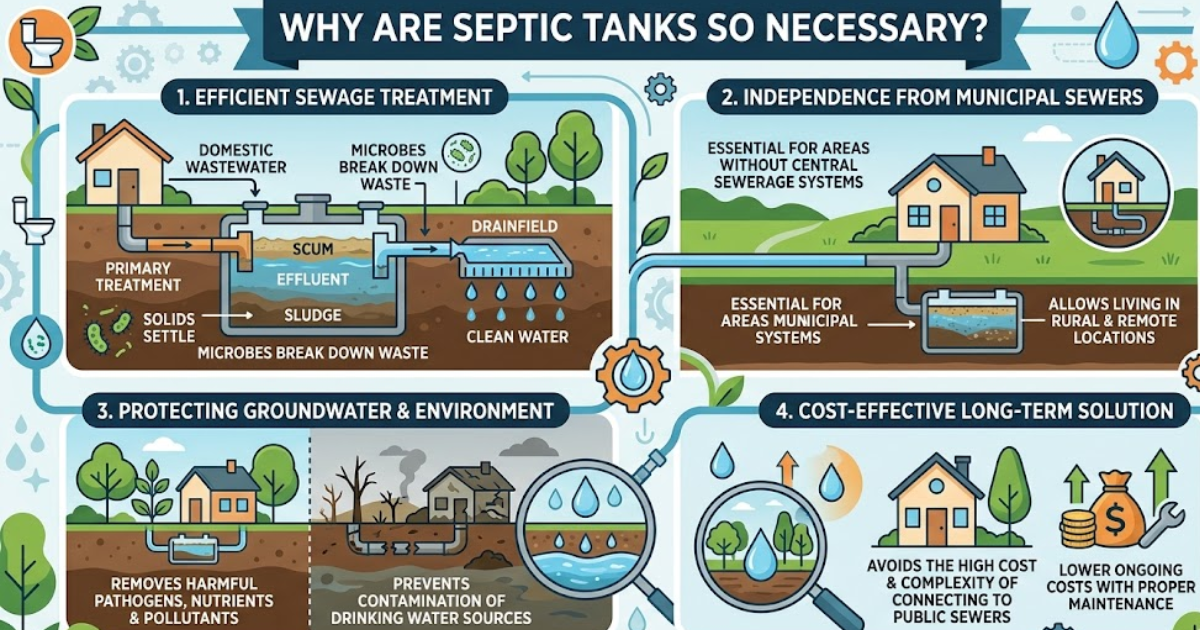
A septic tank works by separating solids from liquids and allowing natural bacteria to break down organic matter. The partially treated water is then released into a drainage field, where it is further filtered by the soil. This process helps prevent untreated waste from contaminating surrounding areas.
Enabling Homes in Rural and Remote Areas
One of the main reasons septic tanks are so necessary is their role in making rural living possible. Many properties are located too far from the main sewer systems to connect economically or practically.
Septic systems allow these homes to operate independently while still maintaining modern standards of sanitation. Without them, development in many rural areas would be limited, and homeowners would face significant challenges managing wastewater safely.
Protecting Public Health
Improper disposal of sewage can lead to the spread of harmful bacteria and disease. Septic tanks play a critical role in reducing these risks by containing and treating waste before it enters the wider environment. By managing wastewater effectively, they help protect drinking water sources and reduce exposure to harmful pathogens. This makes them an essential part of maintaining safe and hygienic living conditions.
Supporting Environmental Protection
When properly maintained, septic tanks are designed to work in harmony with the surrounding environment. They treat waste naturally and release water back into the ground in a controlled and safe manner. This helps to minimize pollution, protect local ecosystems, and support natural filtration processes within the soil. Modern systems are increasingly efficient, making them a responsible choice for environmentally conscious homeowners.
Offering a Cost-Effective Solution
For many properties, especially those in remote areas, connecting to mains drainage is either impractical or too expensive. Septic tanks like a Tricel Vento septic tank provide a more accessible alternative.
While there are upfront installation costs and ongoing maintenance requirements, they eliminate the need for sewer connection fees and can last for decades when properly cared for. This makes them a financially viable long-term solution.
Encouraging Responsible Waste Management
Having a septic tank often encourages more mindful behavior when it comes to waste disposal. Because the system relies on natural processes, what goes into it matters. Homeowners tend to become more aware of avoiding harmful chemicals, non-biodegradable materials, and excessive waste. This leads to better habits that not only protect the system but also benefit the environment overall.
A Quiet but Essential System
Septic tanks may not be visible, but their importance cannot be overstated. They support everyday living, protect public health, and help preserve the environment, all without relying on centralized infrastructure.
In areas where mains drainage isn’t available, they are not just useful; they are necessary. With proper care and maintenance, they continue to provide a dependable and effective solution for managing wastewater.


