

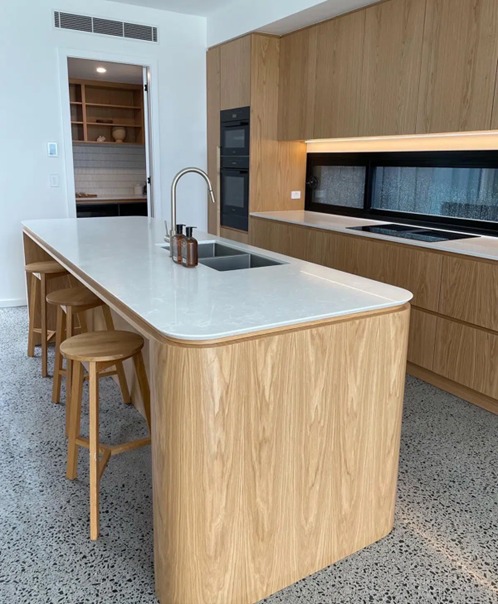
- Surfaces that resist stains, scratches, and heat are essential in high-use kitchens.
- Materials like quartz, porcelain, and sintered stone offer durability without constant upkeep.
- Avoid porous or high-maintenance finishes that can’t handle daily wear.
- The best benchtop choice fits your household’s habits, lifestyle, and design preferences.
You’re not alone if your kitchen feels more like Grand Central Station than a cozy cooking nook. Between morning coffee scrambles, after-school snack raids, and weekend dinner prep marathons, the kitchen sees it all. And in the middle of that chaos? Your benchtop — quietly bearing the brunt of daily life.
That’s why low maintenance surfaces aren’t just a convenience — they’re a survival tool. A good benchtop should be tough, easy to clean, and look great even after your hundredth coffee spill. In this post, we’re taking a closer look at which materials hold up best when life gets messy. Whether you’ve got kids, housemates, or just a knack for multitasking meals and meetings, the right surface can make a huge difference.
By the end of this read, you’ll have a clear idea of which benchtops can keep up with your pace and style.
Why Low Maintenance Matters in a Modern Kitchen
Think about the last time you had a spill, a scratch, or a hot pot land on your counter. Did it clean up easily, or did it leave a mark, stain, or bit of frustration behind?
Today’s kitchens aren’t just for cooking—they’re command centers for the home. That means surfaces must be more than pretty—they must be practical. That white marble might look stunning in photos, but it’s probably not made for real life if it requires constant sealing or cries every time you drop a lemon.
Low maintenance in this context means more than just “easy to wipe down.” It’s about surfaces that resist stains, don’t chip or scratch easily, and don’t need regular TLC to stay looking fresh. That kind of dependability pays off over time. Fewer repairs, less time cleaning, and more time enjoying your kitchen — that’s the real win.
And let’s not forget the financial side of things. Materials that can take a beating tend to last longer. So even if the upfront cost is a bit higher, you’re investing in years of stress-free use, which is gold when you’ve got mouths to feed or guests to entertain.
Exploring Easy-Care Surface Materials
Now that we’ve established how critical it is to have a kitchen that can roll with the punches, let’s talk about the materials that make that happen.
When it comes to low maintenance stone benchtop options, quartz tends to top the list. It’s engineered to be tough, non-porous, and resistant to almost everything you throw at it — coffee, wine, spaghetti sauce, you name it. And the best part? It doesn’t need sealing. Ever.
Porcelain is another rising star. It’s sleek and stylish and can take the heat—literally. You can put hot pans directly on it without worry. It’s also UV-resistant, a bonus if your kitchen gets a lot of natural light.
Then there’s sintered stone, like the superhero version of stone surfaces. It’s manufactured under intense heat and pressure to mimic the properties of natural stone—but with way more durability. It’s stain-proof, scratch-resistant, and available in a fantastic range of colors and textures.
These materials are popular not just for their resilience, but because they look incredible while doing the job. And when you live in a busy household, finding that sweet spot between form and function is key.
In fact, if you speak with design experts or local kitchen suppliers, especially in high-traffic areas or family-focused neighborhoods, they often recommend these surfaces because they withstand wear and tear without losing their charm. That kind of endorsement says a lot.
How These Surfaces Hold Up in Real Life
You can read all the spec sheets in the world, but what is the test of a benchtop surface? Daily life. It’s the splash of red wine on a Friday night, the pasta sauce mishap mid-week, and the time someone forgot to use a cutting board (again). These aren’t hypotheticals — they’re the reality for most kitchens.
How effortlessly they handle this kind of wear and tear makes surfaces like quartz, porcelain, and sintered stone stand out. One family we spoke to with three school-aged kids swears by their quartz benchtop. They’ve had it for five years and still haven’t had to do more than wipe it down with a damp cloth: no stains, scratches, or stress.
And it’s not just about durability. These materials also hold up visually. They don’t dull over time, and many are resistant to UV damage, so your benchtop won’t yellow or fade in that gorgeous natural light streaming through your kitchen window. Whether you prefer the look of marble, concrete, or something ultra-modern, a low-fuss surface nails the aesthetic without the upkeep.
Professional chefs and serious home cooks also favour these materials because they are hygienic. Non-porous surfaces don’t absorb liquids or bacteria, making cleanup fast and food prep safer—an underrated bonus when you’re cooking multiple meals a day.
So whether you’re chasing toddlers or prepping five-course meals, these benchtops are made to keep up. They’re not just durable — they’re dependable.
What to Avoid When Choosing a Benchtop for a Busy Home
With all the options, it’s just as important to know what not to choose, especially if you want your benchtop to complement your lifestyle rather than oppose it.
First up: porous materials like natural marble or certain types of limestone. Sure, they’re beautiful, but they’re also delicate. These surfaces stain easily, scratch quickly, and need regular sealing to stay protected. If your kitchen doubles as a crafting station or you’ve got kids learning to use the toaster, you might find yourself babying these benchtops way more than you’d like.
High-gloss finishes can be another trap. While they look amazing under the proper lighting, they tend to show every fingerprint, smudge, and water spot. That means more wiping — and if you’re not into constantly cleaning up, they’ll drive you nuts.
Also, be cautious when choosing cheaper laminate options. While budget-friendly, they often don’t last. Once damaged, they’re hard to repair and not as heat-resistant as other materials. That coffee pot or hot casserole dish? One wrong move could leave a permanent mark.
And finally, don’t fall for trends that ignore function. A textured concrete finish might be Instagram-worthy, but it’s probably not built for a busy kitchen if it’s impossible to clean or chips at the first sign of impact. Choosing a benchtop isn’t just about how it looks on day one — it’s about how it holds up on day 100, and beyond.
Making the Right Choice for Your Lifestyle
Every household runs differently, so your benchtop should reflect how you use your kitchen. Maybe you’re the kind of person who preps meals in advance, has a smoothie every morning, or finds yourself baking at odd night hours. Or maybe your kitchen’s more of a social hub than a cooking space, with people constantly gathered around the island.
Whatever your kitchen rhythm looks like, it’s worth taking a moment to think practically. How often are you cooking? Do you have young kids or teenagers? Are you the type to clean up immediately, or does the mess linger a bit? These questions matter because the right surface will make your life easier, not more complicated.
Talk to people who’ve undergone a renovation or kitchen redesign. Visit local showrooms where you can touch the materials and see how they respond to light and pressure. Ask questions. See samples in real-life conditions, not just under showroom lighting. Consider consulting with a designer who can help balance aesthetics with function.
Remember, a benchtop isn’t just a style choice. It’s part of your life’s workflow. When you choose a surface that matches your pace, preferences, and priorities, your kitchen becomes more than a place to cook—it becomes a space you enjoy living in every single day.
Conclusion
A busy kitchen doesn’t have to mean constant cleaning or dealing with stained and damaged surfaces. You can keep your space looking sharp while staying sane with the right material choice. The trick is knowing what to look for — and what to avoid — so your kitchen works as hard as you do.
In the end, durability and ease shouldn’t come at the expense of design. The good news is that you don’t have to compromise. Today’s benchtop options offer the kind of smart, stylish performance that makes everyday kitchen life smoother—no matter how hectic things get.