

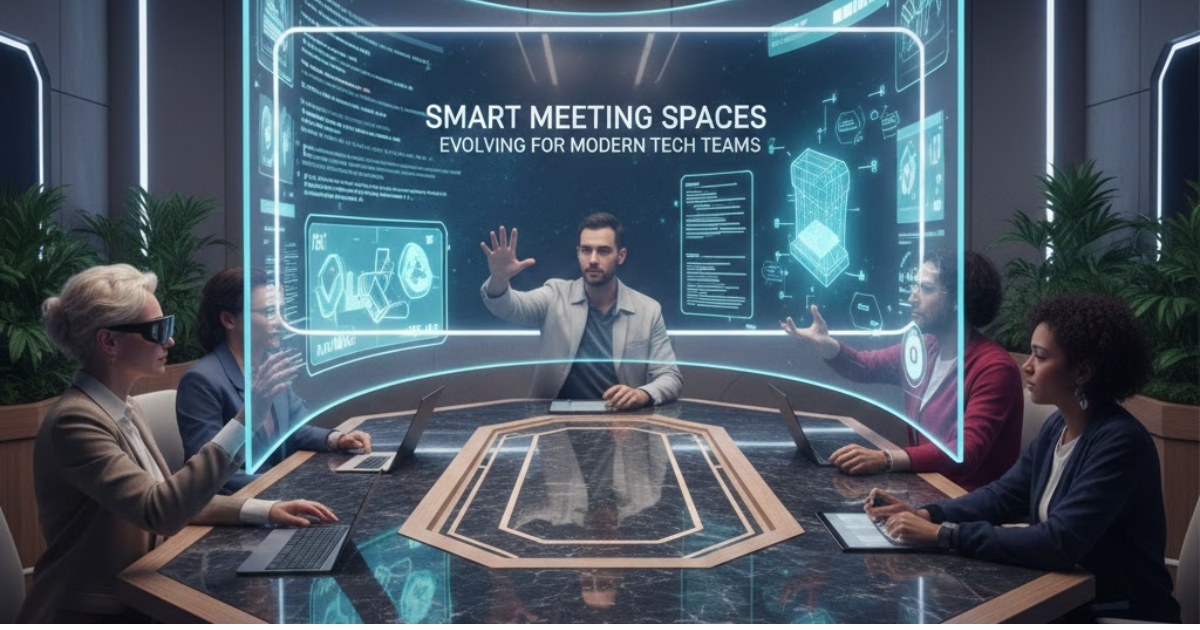
Technology has transformed how teams work, but it has also changed how teams meet. As collaboration becomes more distributed and projects grow more complex, the role of meeting spaces is being redefined. Smart meeting environments are no longer just rooms with tables and screens. They are designed experiences that support focus, communication, and decision-making for modern tech teams.
Collaboration Has Become More Hybrid
Tech teams often operate across time zones and locations. Meetings now include in-person participants alongside remote colleagues. This hybrid structure places new demands on meeting spaces.
Smart meeting spaces are designed to support seamless interaction between physical and virtual attendees. High-quality audio, clear visuals, and intuitive layouts help ensure that everyone feels included and heard. This balance supports collaboration without creating friction.
Technology Is Integrated Rather Than Added
Earlier meeting rooms often treated technology as an add-on. Cables, adapters, and complicated setups disrupted flow. Modern spaces integrate technology into the environment itself.
Screens, connectivity, and controls are designed to work together smoothly. This integration reduces setup time and allows meetings to start with intention rather than troubleshooting. Tech teams benefit from environments that support momentum rather than interrupt it.
Design Supports Focus and Engagement
Smart meeting spaces also consider how design influences behavior. Lighting, acoustics, and seating arrangements all affect attention and comfort. Poor design can lead to distraction and fatigue, even when technology is advanced.
Modern spaces aim to support sustained engagement. Comfortable seating, controlled sound, and thoughtful layouts help participants stay present. This focus leads to clearer discussion and better outcomes.
Meetings Are Becoming More Purpose-Driven
Tech teams increasingly value efficiency. Meetings are expected to produce clear decisions or progress. Smart meeting spaces support this shift by encouraging structured interaction.
Writable surfaces, adaptable layouts, and intuitive tools help teams move from discussion to action. The space itself reinforces clarity and purpose.
Professional Environments Matter for External Interaction
Meetings often involve more than internal teams. Clients, partners, and stakeholders are part of the conversation. Professional meeting environments support credibility and trust.
Using dedicated spaces such as Meeting Rooms in ADGM allows tech teams to present ideas clearly and confidently. These environments reflect professionalism while offering the flexibility modern teams require.
Flexibility Supports Different Meeting Styles
Not all meetings serve the same purpose. Some require brainstorming, others focus on review or decision making. Smart meeting spaces adapt to these needs through flexible furniture and technology setups.
This adaptability allows teams to choose environments that match the intent of the meeting. Flexibility supports better communication and reduces frustration.
Smart Spaces Reduce Cognitive Load
Well-designed meeting spaces reduce the mental effort required to participate. When technology works smoothly and the environment feels comfortable, participants can focus on content rather than logistics.
Reducing cognitive load improves listening and problem-solving. This is especially valuable for tech teams working on complex challenges.
Meeting Spaces as Strategic Tools
Meeting environments are becoming strategic assets rather than operational necessities. They influence how teams collaborate, how decisions are made, and how relationships are built.
As tech teams continue to evolve, the spaces that support them will evolve as well. Smart meeting spaces reflect a deeper understanding of how environment, technology, and human interaction intersect to shape modern work.