
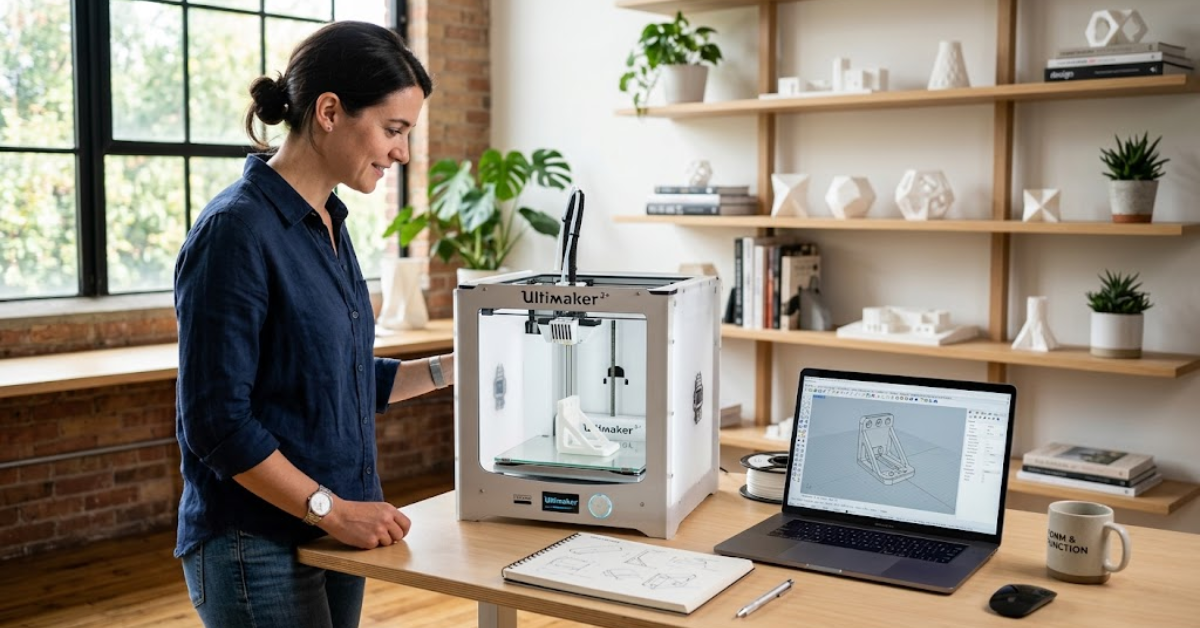
For decades, turning a digital design into a physical object usually required access to a factory, specialist workshop, or external manufacturer. A designer could create something on a computer, but producing even a prototype often meant handing the project over to somebody else.
That relationship is changing. Advances in digital manufacturing equipment are bringing production much closer to the people creating the original designs. From compact 3D printers to computer-controlled cutting machines, designers can increasingly move between an idea, prototype, and revised version without leaving their own workspace.
Making the Most of Desktop Manufacturing
One of the biggest changes has been the growing accessibility of 3D printing. The basic concept is straightforward: a digital model is translated into instructions that allow a machine to build a physical object layer by layer.
For designers, that creates a much faster connection between what appears on a screen and what exists in the real world. A product designer developing a new component, for example, can print an early prototype, identify problems with its dimensions, and adjust the original file. Another version can then be produced without waiting for a traditional manufacturing process to begin.
More Control Over Prototyping
Suppliers such as Hybrid Services illustrate how professional 3D printing equipment is becoming part of a broader digital production landscape. Access to machines capable of producing detailed models and prototypes gives businesses another option between purely digital design and large-scale manufacturing.
This can be particularly useful when developing products where physical testing matters. An object might look perfectly proportioned on a computer screen but feel uncomfortable, impractical, or unnecessarily bulky once it is held. Producing prototypes earlier can expose those issues before substantial resources are committed to manufacturing.
Small Production Runs Become Practical
Digital manufacturing also changes the economics of quantity. Traditional production techniques can make the most financial sense when thousands of identical items are required. Setting up tooling for only a handful of products may be prohibitively expensive.
3D printing can offer greater flexibility for smaller runs because designs can be changed digitally rather than requiring completely new tooling. That creates possibilities for personalised products, specialist components and replacement parts that may never need to be produced in enormous quantities.
Designers Can Experiment Faster
Perhaps the biggest advantage is not simply producing things locally, but learning more quickly. Design is inherently iterative. A first idea rarely becomes the final product without modification. When designers can manufacture prototypes close to where they work, the cycle between designing, testing, and improving becomes shorter. This can encourage experimentation because producing another version does not necessarily require restarting a lengthy external manufacturing process.
A Changing Relationship With Manufacturing
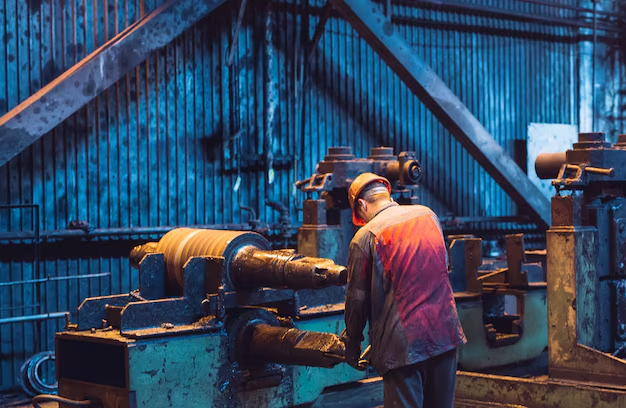
Large factories will remain essential for producing countless everyday goods. Desktop and professional 3D printers are not about replacing industrial manufacturing altogether. Instead, they are changing where certain stages of production happen. Design studios, engineering departments, universities and smaller businesses can increasingly manufacture prototypes and specialist objects themselves before deciding whether larger-scale production is necessary.
As digital manufacturing equipment continues to develop, the boundary between designing something and making it is becoming less distinct. The factory is not disappearing, but some of its capabilities are moving much closer to the designer.


One thought on “Machines Bringing Manufacturing Closer to the Designer”