Most of us deal with numbers every single day — whether it’s figuring out how much we’ll earn per hour, calculating a discount before buying something, checking a fitness score, or estimating materials for a project.
Yet many people either guess, use the wrong formula, or waste time searching through complicated explanations online.
The good news? You don’t need advanced maths skills or expensive software to get accurate answers. Free online calculators can handle these calculations in seconds.
In this article, we’ll look at ten common calculations people often get wrong — and show you how to avoid those mistakes.
1. Working Out Your Real Hourly Pay
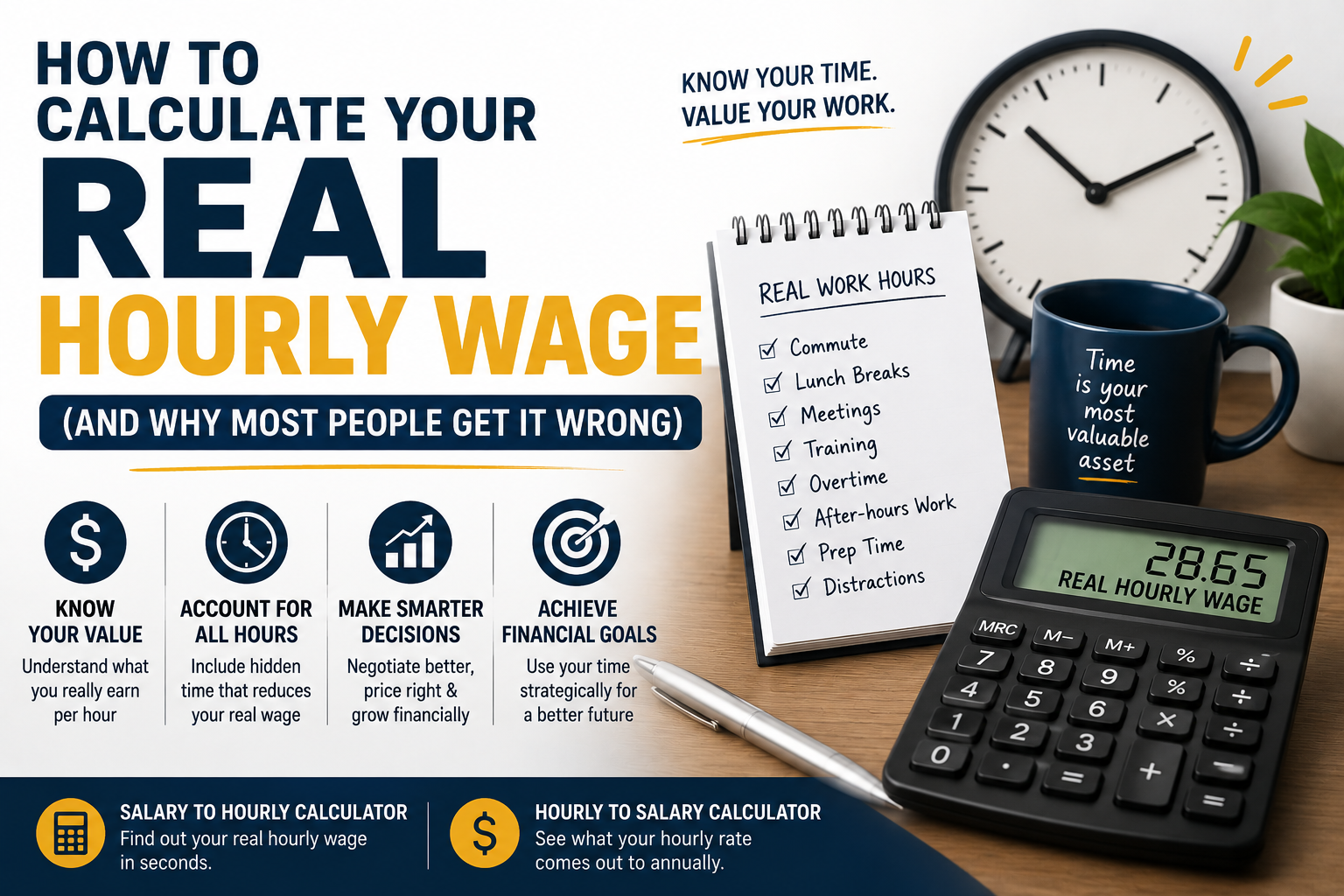
Many salaried employees know their monthly income but have no idea what they actually earn per hour.
Once overtime, unpaid breaks, commuting time, and additional responsibilities are considered, the real hourly rate can look very different from the number on a job offer.
Getting this wrong can lead to undercharging clients, accepting poor job offers, or undervaluing your time.
2. Calculating ACFT Scores
The Army Combat Fitness Test (ACFT) includes multiple events that contribute to a final score. Many candidates struggle to calculate their total score accurately because each event has its own scoring standards and performance benchmarks.
Whether you’re preparing for military service or tracking progress, using the correct scoring method is essential for understanding where you stand and which areas need improvement.
3. Percentage Discounts While Shopping
“30% off a $100 item — how much do I actually save?”
It sounds simple, but many shoppers calculate discounts incorrectly.
One of the most common mistakes is confusing the discount amount with the final price. Small errors can lead to overspending or misunderstanding the true value of a deal.
4. Profit Margin vs. Markup
Business owners, freelancers, and online sellers frequently confuse profit margin with markup.
The problem is that a 25% markup does not equal a 25% profit margin.
Using the wrong calculation can lead to incorrect pricing decisions, lower profits, and even losses over time.
5. Calorie Targets for Weight Management
Whether someone wants to lose weight, maintain their current weight, or build muscle, calorie targets play a major role.
Unfortunately, many people rely on generic estimates found online rather than calculations tailored to their age, activity level, height, and goals.
Even small calorie miscalculations can slow progress significantly.
6. Age and Date Differences
Calculating exact ages or determining the number of days between two dates sounds easy until leap years, varying month lengths, and future dates get involved.
These calculations are frequently needed for contracts, events, anniversaries, retirement planning, and project deadlines.
Manual calculations often lead to mistakes.
7. Loan and Interest Calculations
How much will a loan really cost?
What will interest add over two, three, or five years?
Many borrowers focus only on monthly payments without understanding the total amount they’ll repay over the life of the loan.
A small misunderstanding of interest calculations can have a major financial impact.
8. Speed, Distance, and Time Problems
These calculations appear in everyday situations more often than people realize.
Travel planning, delivery schedules, logistics, sports tracking, and route optimization all depend on understanding the relationship between speed, distance, and time.
Using the wrong formula can produce results that are far from accurate.
9. Statistical Averages (Mean, Median, Mode)
Students, researchers, business professionals, and analysts regularly work with averages.
However, many people mistakenly use the mean when the median provides a more accurate picture, especially when extreme values are present.
Misinterpreting averages can lead to poor decisions and misleading conclusions.
10. Construction Calculations
Construction projects involve dozens of measurements and calculations.
Whether you’re estimating concrete volume, calculating square footage, determining material requirements, or measuring dimensions, even a small mistake can become expensive.
Accurate construction calculations help reduce waste, control costs, and ensure projects stay on schedule.
The Simplest Fix: One Platform for All These Calculations
Rather than bookmarking multiple websites or trying to remember formulas, many people prefer having one reliable place for everyday calculations.
WellCalculate is a free online calculator platform designed to make complex calculations simple. Whether you need financial tools, construction calculators, fitness-related calculations, mathematical formulas, or statistical analysis, everything is available in one place.
The platform currently offers calculators across categories including Finance, Health, Mathematics, Statistics, Physics, Construction, and many other practical topics.
Most tools provide results instantly, without sign-ups, subscriptions, or unnecessary distractions.
For students, professionals, business owners, and everyday users, having quick access to accurate calculations can save both time and effort.
Why Getting These Right Actually Matters
Small calculation mistakes rarely feel important in the moment.
But over time, they add up.
Mispricing your services can cost thousands in lost income. Incorrect calorie targets can slow fitness progress. Poor loan calculations can lead to unexpected financial stress. Construction measurement errors can increase project costs significantly.
The good news is that accuracy no longer requires complicated formulas or spreadsheets.
With the right calculator, the difference between guessing and knowing often takes less than thirty seconds.
Conclusion
Most everyday calculation mistakes don’t happen because people are bad at maths.
They happen because the wrong formula is used, important variables are ignored, or calculations are done manually when better tools are available.
From hourly pay and ACFT scores to business margins, construction estimates, and loan calculations, accurate numbers lead to better decisions.
Instead of guessing, use reliable calculators whenever possible. You’ll save time, reduce errors, and make more confident decisions in your work, finances, studies, and daily life.