
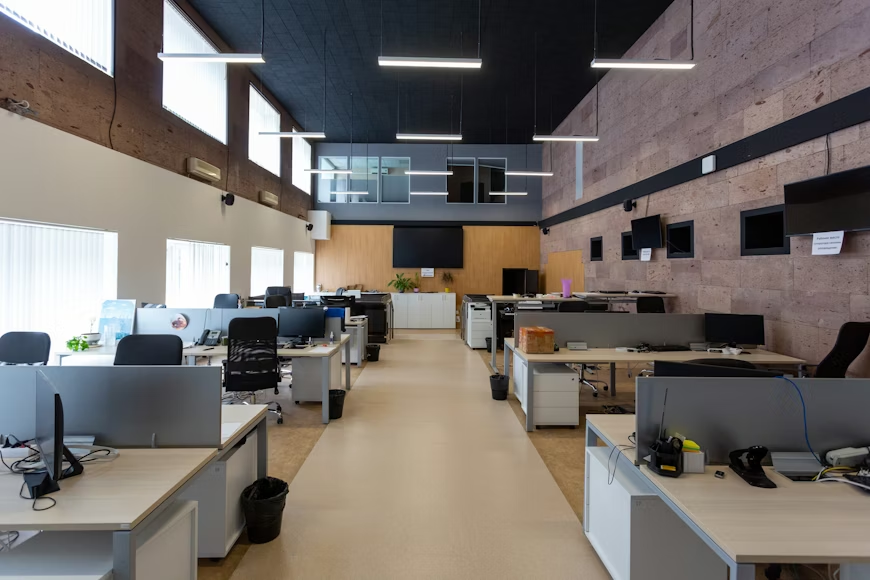
Step into a modern office and it’s hard not to be impressed. The layouts are open yet intentional. There are breakout zones, ergonomic chairs, better lighting, and an overall sense that companies are trying to do things right.
On paper, today’s workplaces are more thoughtful than ever before. Yet, many employees still feel a quiet resistance to them. Focus doesn’t come as easily as expected, energy fades sooner than it should, and work often feels slightly more demanding.
This disconnect isn’t random. It reveals something important. Modern offices have improved visually and structurally; that’s true. However, they still misunderstand how people actually work, think, and function throughout the day in subtle but meaningful ways.
They Treat Lighting as Design, Not as a Performance Tool
Lighting is often one of the first things companies upgrade. Brighter spaces, sleek fixtures, and well-lit desks create the impression of a better work environment. But the impact of lighting goes far beyond aesthetics.
According to Business.com, lighting directly affects mood, alertness, and mental well-being. Poor lighting can reduce energy levels and increase fatigue, while well-designed lighting can improve focus and productivity. What stands out is that employees who have control over their lighting conditions report higher satisfaction and better perceived performance.
Yet most offices still rely on fixed lighting setups. They assume one setting works for everyone, across all tasks and times of day. That’s rarely true. People have different sensitivities, and their energy shifts throughout the day.
Here, execution plays a more critical role than it often seems. Lighting only works as intended when placement, intensity, and integration with the overall layout are handled correctly. Many businesses choose the right fixtures but overlook how they are actually installed within the space.
In practice, this is where office installation services come in, ensuring proper positioning, wiring, and alignment so lighting functions as it should. Without that, even modern setups fall short. They don’t adapt, don’t respond, and end up quietly draining attention over time.
They Overlook How the Body Responds to the Workplace
Workplaces are still largely designed around visual comfort, not biological function. But emerging research is changing that view.
A study highlighted by News-Medical found that exposure to natural daylight during office hours significantly improves glucose stability in individuals with type 2 diabetes.
Participants spent more time within healthy glucose ranges and showed improved metabolic responses. The research also noted that people typically spend 80 to 90 percent of their time indoors. Most of this time is spent under artificial lighting that does not align with natural circadian rhythms.
This matters because light is not just visual input. It is a signal that regulates sleep cycles, energy levels, and metabolic processes.
Modern offices often include large windows and open layouts, but access to daylight is uneven. Some employees sit near windows, while others remain in artificially lit zones for most of the day.
This creates an invisible imbalance. The space may be designed to include natural light, but the way it is distributed determines who actually benefits. Without thoughtful positioning and planning, even well-designed offices fail to deliver these health advantages in a meaningful way.
They Confuse Flexibility with Functionality
Flexibility has become a defining feature of modern offices. Open spaces, shared desks, and multipurpose zones are designed to support different working styles and evolving team needs. On the surface, this approach makes sense, especially in hybrid environments where adaptability is essential.
Insights from Forbes suggest that leaders are now treating workplace design as a strategic lever rather than a background decision. Offices are expected to shape culture, encourage collaboration, and still protect time for focused work. This has led to environments that attempt to balance openness with quiet zones, while also prioritizing comfort and ergonomics as part of productivity.
But flexibility does not always translate into functionality. When spaces are not clearly defined or thoughtfully executed, they create confusion instead of freedom. Collaborative areas can become noisy and disruptive, while quiet zones may feel disconnected or underutilized.
Employees often adjust their behavior to fit the space, rather than the space supporting their work. Without careful planning and execution, flexibility becomes less of an advantage and more of a daily source of friction.
They Underestimate the Cost of Poor Execution
This is where most modern offices fall short. An Inc. report highlights that many employees returning to offices are finding workspaces that are not fully ready. Around two-thirds of workers say they are improvising their setups to function effectively. This includes adjusting layouts, working around missing infrastructure, and finding temporary solutions to basic problems.
This kind of environment doesn’t stop work entirely. It simply makes everything slightly harder. Over time, that added effort reduces efficiency and increases frustration. The issue is not a lack of awareness. Companies understand that lighting, layout, and ergonomics matter. They invest in redesigning spaces and aligning them with modern work needs.
What they often overlook is execution. As noted by FourSpoke, a well-designed office only works if it is implemented correctly. The placement of workstations, the integration of lighting, and the alignment of infrastructure all depend on how the setup is carried out. The overall usability of the space is shaped by these decisions.
When that layer is rushed or fragmented, the entire workplace experience suffers, no matter how good the initial design may have been.
FAQs
How does office layout affect productivity?
Office layout determines how easily people can focus, move, and collaborate. Poor layouts create distractions and slow down everyday tasks without being obvious. A balanced layout with defined zones for focus and teamwork helps maintain efficiency and reduces mental fatigue.
What kind of office light is best?
The best office lighting combines natural daylight with adjustable artificial lighting. Natural light supports energy levels, mood, and overall well-being throughout the office day. Adjustable lighting allows individuals to control brightness based on tasks, which improves comfort and sustained focus.
How should I arrange my office furniture?
Arrange your office furniture to support both comfort and workflow. Keep frequently used items within easy reach and position your desk to reduce distractions and glare. Create clear zones for focused work and movement so the space feels organized and easy to navigate.
In the broader picture, the success of any office depends on how well ideas are carried through. Modern workplaces show a stronger understanding of how the environment shapes performance. Lighting affects mood, daylight supports health, and design guides collaboration.
Yet, everyday experiences often tell a different story. Employees continue to face spaces that feel inconsistent, incomplete, or subtly inefficient. This highlights a clear gap between intention and execution.
Offices today are built on better principles, but those principles do not always translate effectively in practice. Closing this gap is what will ultimately determine whether workplaces truly support the people within them.