
Two years ago, a Milwaukee automotive supplier lost $127,000 from a single bad supplier decision. They chose a CNC turning shop based on lowest quote—$42/piece vs $68/piece from qualified competitors—for 2,400 stainless steel transmission shafts requiring ±0.005mm tolerances.
Results: 18% scrap rate from tolerance drift, 22-day delivery delay, emergency re-sourcing at $95/piece rush pricing, and damaged OEM relationship requiring executive intervention. Total impact: $127,000 plus 6-month qualification penalty from their tier-1 customer.
The procurement manager’s lesson: “We didn’t lose money because of price. We lost money because we evaluated cost instead of capability.”
Selecting a precision CNC turning partner determines whether components meet specifications consistently or create cascading quality failures. This guide uses February 2026 supplier qualification data, tolerance capability benchmarks, and evaluation criteria preventing expensive mistakes.
What Precision CNC Turning Actually Means
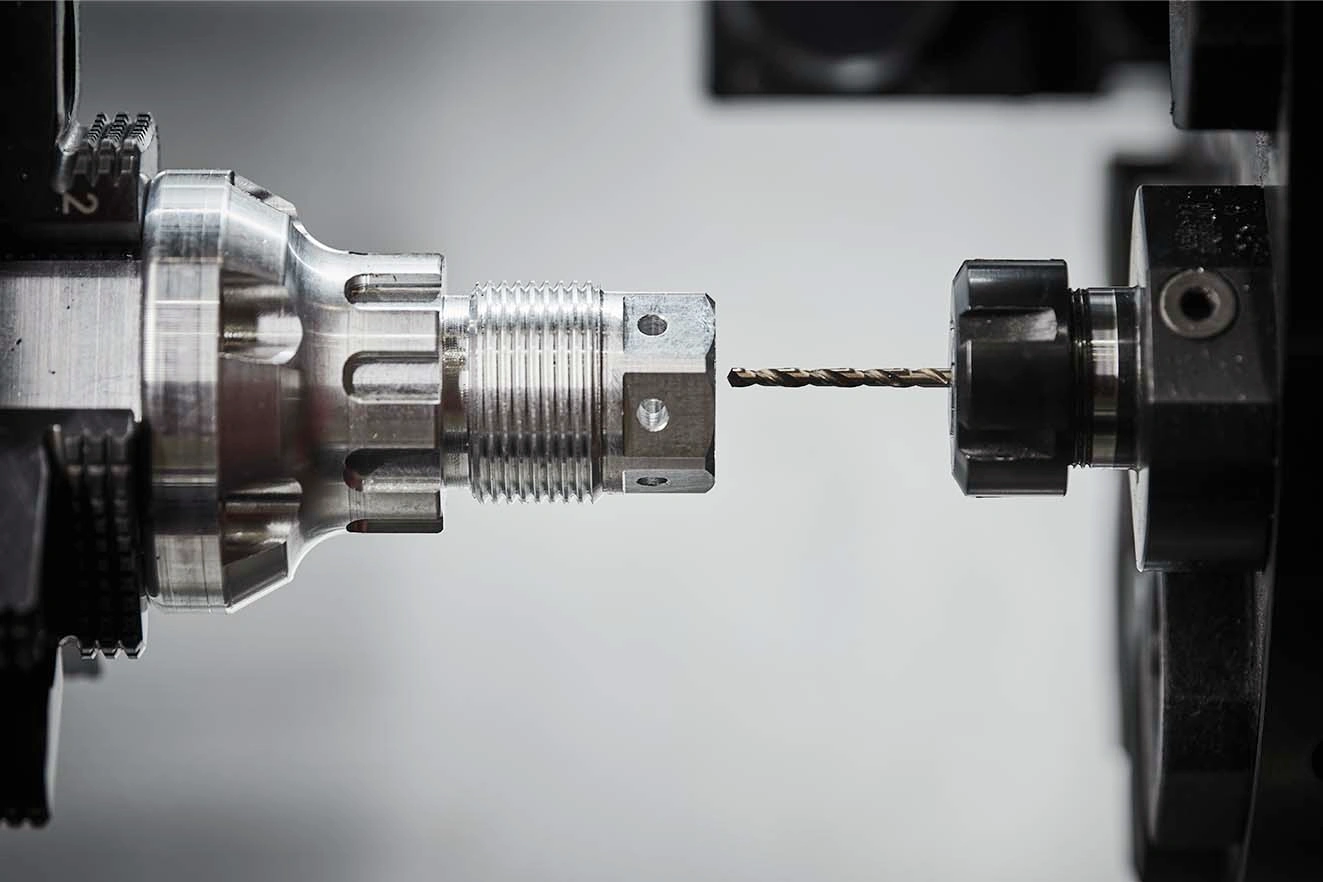
Precision CNC turning produces cylindrical parts holding ±0.005mm (±0.0002″) tolerances or tighter with controlled surface finishes (Ra 0.4-1.6 μm) and repeatable consistency across production batches. This distinguishes precision turning from standard CNC turning (±0.02mm typical) used for non-critical components.
Critical applications: Aerospace shafts and pins, medical implant components, automotive transmission parts, hydraulic valve spools, bearing races, precision fasteners, instrumentation components requiring tight concentricity and cylindricity.
Standards referenced: ISO 2768 (general tolerances), ISO 1101 (geometric dimensioning), ASME Y14.5 (GD&T), industry-specific requirements (AS9100 aerospace, ISO 13485 medical, IATF 16949 automotive).
9 Critical Supplier Evaluation Criteria
1. Documented Tolerance Capability With Verification
Precision CNC turning requires proven capability, not marketing claims.
Tolerance capability by machine class:
| Machine Type | Typical Capability | Precision Capability | Applications |
|---|---|---|---|
| Standard CNC lathe | ±0.02mm | ±0.01mm | General components |
| Precision turning center | ±0.01mm | ±0.005mm | Aerospace, medical |
| Swiss-type CNC | ±0.005mm | ±0.002mm | Slender parts, high L/D ratios |
Verification requirements:
- Request inspection reports from similar parts (CMM data showing actual measured values)
- Review process capability studies (Cpk ≥1.33 minimum for critical dimensions)
- Examine first article inspection reports (AS9102 format for aerospace)
- Confirm measurement equipment capability (coordinate measuring machines: Zeiss, Hexagon, Mitutoyo)
Red flag: Suppliers quoting ±0.005mm capability without documentation or measurement equipment to verify it.
2. Equipment Capability and Technology Investment
Machine technology determines achievable precision:
Multi-axis turning centers (Haas ST-30, Mazak QT-300, DMG MORI NLX 2500):
- Live tooling for milling operations without part handling
- Sub-spindle for complete part machining
- Y-axis capability for off-center features
Swiss-type CNC lathes (Citizen Cincom, Star SR-20, Tsugami SS207):
- Guide bushing support for slender parts (L/D ratios >3:1)
- Sliding headstock design minimizing deflection
- Simultaneous front/back tooling reducing cycle time
Precision features indicating capability:
- Spindle accuracy: ±0.002mm radial runout maximum
- Thermal stability: Temperature-controlled environment or compensation
- Rigid construction: Cast iron base, precision ground ways
- Tool monitoring: Broken tool detection, wear compensation
Verification: Request machine list with specifications, age, and maintenance schedule. Equipment investment indicates commitment to precision.
3. Quality Management Systems and Process Control
Consistency separates reliable partners from risky ones.
Required quality elements:
First Article Inspection (FAI): 100% dimensional verification before production, documented per AS9102 (aerospace) or equivalent. Confirms process capability before committing to full run.
In-process inspection: Statistical sampling during production (every 25-50 pieces typical), SPC charting for critical dimensions, immediate corrective action on drift.
Final inspection: Verified against drawing specifications, CMM reports provided with shipment, material certifications included.
Certifications validating quality systems:
- ISO 9001:2015 (general quality management baseline)
- AS9100D (aerospace components mandatory)
- ISO 13485 (medical device turning required)
- IATF 16949 (automotive precision parts)
Case study: Medical implant component supplier selection (January 2026)
Application: 500-piece spinal implant component, Ti-6Al-4V ELI (Grade 23), ±0.003mm critical dimensions, Ra 0.8μm surface finish, full material traceability
Supplier A (lowest quote $280/piece): ISO 9001 only, no medical certification, titanium experience unclear Supplier B (FastPreci, $340/piece): ISO 13485 certified, documented titanium expertise, integrated quality system from machining through inspection
Selection: FastPreci based on risk mitigation—medical device quality systems, material traceability documentation, proven biocompatible material experience preventing FDA submission delays worth significantly more than $60/piece savings.
Outcome: Zero nonconformances, first-article approval in single submission, production delivered on 18-day schedule enabling clinical trial timeline.
4. Design for Manufacturability (DFM) Engineering Support
Superior suppliers improve designs, not just manufacture them.
Value-adding DFM feedback:
- Identifying features increasing cycle time unnecessarily (sharp internal corners, excessive tool changes)
- Suggesting tolerance relaxation on non-critical dimensions (reducing inspection time, allowing faster cutting parameters)
- Recommending material substitutions when performance permits (303 vs 316 stainless reducing machining time 30-40%)
- Optimizing part orientation minimizing setups and improving surface finish
Evaluation test: Submit intentionally over-specified drawing (blanket ±0.005mm tolerances, sharp corners, deep grooves). Capable partners identify issues during quoting with specific optimization recommendations.
5. Material Expertise Across Alloy Types
Turning performance varies dramatically by material:
| Material | Machinability | Tool Life | Typical Applications | Special Considerations |
|---|---|---|---|---|
| 303 Stainless | Excellent | Baseline | General precision parts | Free-machining, best surface finish |
| 316 Stainless | Moderate | 40-60% of 303 | Corrosion-critical | Work hardening, sharp tools essential |
| Aluminum 6061 | Excellent | 3-5× steel | Aerospace, lightweight | High speeds, chip control critical |
| Titanium Ti-6Al-4V | Difficult | 15-25% of steel | Aerospace, medical | Heat generation, specialized tooling |
| Brass C360 | Excellent | 2-4× steel | Instrumentation | High speeds, excellent finish |
| 17-4PH Stainless | Difficult | 30-50% of 303 | High-strength applications | Abrasive, post-heat-treat machining |
Verification questions:
- “What percentage of your work involves [your material]?”
- “Can you provide material certifications showing chemistry and mechanical properties?”
- “What tooling strategies optimize [material] performance?”
6. Communication Clarity and Technical Responsiveness
Precision projects demand precise communication.
Quality indicators during evaluation:
- RFQ response time <24 hours for established shops
- Technical questions answered by engineers, not just sales
- Ambiguous drawing features identified and clarified
- Realistic lead times with milestone breakdown
- Itemized quotes showing setup, material, machining, inspection separately
Red flag: Vague responses during quoting predict communication problems during production—dimensional misunderstandings, unreported delays, incomplete documentation.
7. Lead Time Reliability With Capacity Transparency
Realistic timelines matter more than optimistic promises.
Typical lead times (Feb 2026, precision turning):
- Simple shafts, standard material: 7-12 business days
- Moderate complexity, tight tolerances: 12-18 days
- Complex Swiss-type parts: 15-25 days
- Exotic materials (titanium, Inconel): +5-10 days material procurement
Capacity verification:
- Current workload and machine utilization
- Shift structure (single vs multi-shift operation)
- Overflow capacity during demand surges
- Historical on-time delivery performance (request metrics: >95% target)
8. Scalability From Prototype Through Production
Today’s 200-piece order may become 2,000 pieces next quarter.
Scalability factors:
- Machine capacity supporting volume growth
- Fixture/tooling investment for production runs
- Process documentation enabling consistent replication
- Transition planning from low-volume to production parameters
Cost impact of volume:
- 50 pieces: $68/piece (high setup burden)
- 200 pieces: $52/piece (setup amortized)
- 1,000 pieces: $38/piece (optimized tooling, fixtures)
9. Industry Track Record and Verifiable References
Reputation predicts future performance.
Request specifics:
- Customer references in your industry (aerospace, medical, automotive)
- Case studies showing similar complexity/tolerance requirements
- Defect rate statistics (target: <2% for qualified suppliers)
- Problem resolution examples (how they handle nonconforming material)
Companies like FastPreci build credibility through documented quality systems, responsive engineering collaboration, and proven expertise in complex precision components—particularly valuable when applications involve challenging materials or tight tolerances where supplier experience directly impacts success probability.
Precision vs Standard CNC Turning: Performance Distinction
| Characteristic | Standard CNC Turning | Precision CNC Turning |
|---|---|---|
| Tolerance capability | ±0.02mm (±0.0008″) | ±0.005mm (±0.0002″) or tighter |
| Surface finish | Ra 3.2-6.3 μm | Ra 0.4-1.6 μm |
| Concentricity | 0.05mm typical | 0.01mm achievable |
| Cylindricity | 0.03mm typical | 0.005mm achievable |
| Equipment | General-purpose lathes | Precision turning centers, Swiss CNC |
| Inspection | Sample checking | 100% critical dimension verification |
| Applications | General components | Aerospace, medical, high-performance |
| Cost premium | Baseline | +40-120% depending on complexity |
Supplier Red Flags Indicating Risk
Reject suppliers who:
- Refuse sharing inspection reports or capability studies
- Provide unclear pricing without setup/material/machining breakdown
- Cannot explain quality control procedures specifically
- Quote extremely low prices without justification (indicates inadequate process control or hidden costs)
- Give vague tolerance commitments (“we can hit whatever you need”)
- Lack measurement equipment verifying claimed capabilities
- Show inconsistent sample part quality
FAQs: Precision CNC Turning Partner Selection
What is precision CNC turning?
Precision CNC turning produces cylindrical parts holding ±0.005mm tolerances or tighter with controlled surface finishes (Ra 0.4-1.6 μm) and geometric accuracy (concentricity, cylindricity, perpendicularity). Used for aerospace shafts, medical implants, automotive transmission components, hydraulic valve spools where dimensional accuracy critical for assembly fit and performance.
How much does precision CNC turning cost?
Simple precision shafts (25-50mm): $28-$65/piece. Moderate complexity with tight tolerances: $65-$140/piece. Complex Swiss-type parts or exotic materials: $140-$380+/piece. Costs depend on material, tolerance requirements, complexity, volume, and inspection level. Always request itemized quotes showing setup, material, machining time, and inspection separately.
What tolerances can CNC turning achieve?
Standard CNC lathes: ±0.02mm typical. Precision turning centers: ±0.005-0.01mm. Swiss-type CNC: ±0.002-0.005mm. Ultra-precision with temperature control: ±0.001mm achievable. Actual capability depends on machine rigidity, thermal stability, part geometry, material, and supplier expertise. Request process capability studies (Cpk data) verifying claimed tolerances.
What materials can be precision CNC turned?
Common: 303/316 stainless steel, 6061/7075 aluminum, brass, tool steel. Challenging: titanium (Ti-6Al-4V), Inconel, 17-4PH stainless, hardened steels. Engineering plastics: PEEK, Delrin, UHMW. Each material requires specific tooling strategies, cutting parameters, and expertise. Verify supplier’s experience with your specific alloy grade before committing.
How long does precision CNC turning take?
Lead times (Feb 2026): Simple parts 7-12 days, moderate complexity 12-18 days, complex Swiss-type parts 15-25 days. Includes material procurement (1-5 days standard alloys, 5-15 days exotics), programming/setup (1-3 days), production machining, inspection, and documentation. Rush service available at 50-100% premium reducing timeline 40-60%.
What’s the difference between CNC turning and Swiss turning?
Standard CNC turning: Part held in chuck, tools approach from outside, suitable for L/D ratios <3:1. Swiss turning: Guide bushing supports material near cutting tool, sliding headstock feeds bar stock through bushing, ideal for slender parts (L/D >3:1), simultaneous front/back tooling. Swiss achieves tighter tolerances on long parts but costs more per piece.
Strategic Partner Selection for Long-Term Success
Precision CNC turning partnerships determine whether components meet specifications consistently or create quality failures affecting assembly performance, customer satisfaction, and brand reputation.
Evaluate suppliers on documented tolerance capability (inspection reports, Cpk studies), equipment investment (modern machines, measurement systems), quality certifications (ISO 9001, AS9100, ISO 13485), DFM engineering support, material expertise, and verifiable track record—not just quoted piece price.
The right CNC turning partner protects tolerances, communicates proactively, documents processes thoroughly, and plans for long-term collaboration supporting your growth and quality objectives.
What precision turning challenges are preventing confident supplier selection—tolerance verification, material expertise, or scalability concerns?