
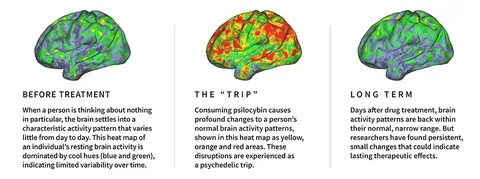
Psilocybin sits in a strange spot in alcohol treatment right now. It’s not standard care. It’s not FDA-approved for alcohol use disorder. And yet, serious researchers keep running serious trials, and some early results look hard to ignore.
So the debate isn’t “psychedelics, yay or nay.” The real debate is tighter than that: can psilocybin-assisted therapy prevent relapse after someone has already done the brutal work of stopping, and if so, what rules need to exist so people don’t get hurt or sold a fantasy?
Because relapse prevention is where a lot of treatment plans quietly struggle. Detox ends. Motivation fades. Life comes back online, bills, triggers, family conflict, boredom, the whole thing. And alcohol has a way of sliding back in when your guard drops.
Let’s talk about what the trials actually test, what an “FDA-grade” protocol would demand inside a rehab setting, and why ethics and expectations matter as much as outcomes.
Why “relapse prevention” is the real stress test
Relapse is not a moral failure, it’s a system problem
If you’ve been around recovery spaces, you’ve heard the arguments. Some people treat relapse like a personal defect. That framing doesn’t help. Relapse is usually a predictable collision between stress, learned habits, social cues, sleep issues, untreated anxiety or depression, and plain old access.
Most relapse prevention tools aim at the basics:
- reduce cravings
- strengthen coping skills
- shrink exposure to triggers
- increase support and accountability
Medications like naltrexone and acamprosate help some people. Therapy helps. Mutual-help groups help. None of it works for everyone, and relapse rates stay stubborn.
Psilocybin changes the “why now?” question
Here’s the thing. Psilocybin isn’t pitched as a daily craving blocker. It’s pitched as a catalyst that, paired with structured therapy, can change how a person relates to alcohol, shame, and self-control.
That claim sounds big, and it’s exactly why trial design matters. If a study can’t separate true clinical effect from hype, you end up with headlines instead of healthcare.
A 2025 paper focused directly on relapse prevention after withdrawal treatment highlights how specific this question is: not “does psilocybin reduce drinking,” but “does it reduce relapse after detox-style stabilization.”
How relapse-prevention trials are designed (and why you should care)
Blinding is a headache, and it’s not a small detail
In drug trials, “double-blind” means neither the participant nor the staff knows who got the real drug. That protects against expectancy effects.
With psilocybin, blinding gets messy. People often know if they got the active dose. Their therapists may suspect it too. That matters because expectation alone can change behavior, at least short term.
So researchers try workarounds:
- active placebos (a substance that creates some noticeable effects)
- careful scripting so therapists don’t “lead” participants
- independent outcome assessors who stay blind
You can roll your eyes at these details, but they’re the difference between solid evidence and a mood.
Endpoints tell you what the study is really testing
A relapse-prevention trial can define “success” in different ways, and you should always look for that definition.
Common endpoints in alcohol studies include:
- percent heavy drinking days over a set window
- time to first heavy drinking day (a relapse-style endpoint)
- abstinence rate at follow-up
- biomarkers, like phosphatidylethanol (PEth), to backstop self-report
That biomarker detail matters more than people think. Alcohol research has a long history of messy self-report, sometimes honest, sometimes not. Biomarkers don’t solve everything, but they tighten the audit trail.
One more design point: follow-up length. If a trial only checks outcomes at 4–8 weeks, it risks measuring an early “afterglow” period. Longer follow-ups are harder and more expensive, but they answer the real question: does change hold when life gets annoying again?
What an “FDA-grade” protocol would require in a rehab setting
Screening for risk is not optional
If psilocybin ever moves closer to mainstream alcohol treatment, screening will be the gatekeeper, and it should be strict.
A careful program will screen for:
- personal or family history of psychosis or bipolar disorder
- current severe suicidality
- unstable medical issues (cardiovascular risk can matter during intense sessions)
- meds that complicate the picture (some psychiatric meds may blunt effects or raise safety questions)
- active use patterns that make stabilization unrealistic
A lot of people hear “screening” and think “gatekeeping.” It’s not. It’s basic harm reduction. You don’t want a person walking into a high-intensity altered state with unmanaged mania risk or no post-session support.
ClinicalTrials.gov listings also show how much emphasis researchers place on safety language, inclusion criteria, and structured psychotherapy alongside the dosing. That’s not decoration.
The session day looks more like a procedure than a wellness trend
An “FDA-grade” model inside rehab would look operationally heavy. Think checklists, staffing ratios, and escalation plans.
It often includes:
- multiple prep sessions (history, goals, coping plan)
- a monitored dosing session in a controlled room
- at least two trained staff present (often a therapy dyad)
- vitals monitoring and a plan for acute anxiety or panic
- clear boundaries around touch, privacy, and consent
- immediate post-session check-ins
- scheduled integration therapy over weeks
And yes, this costs money. It also demands staffing depth. A center that can run high-structure care, including strong aftercare planning, is better positioned than a place that struggles to cover basics.
That’s one reason some people point to higher-resourced programs when talking about operational readiness. For example, a Luxury Rehab in LA model can, in theory, support the staffing intensity and continuity that psychedelic-assisted protocols require. That doesn’t make it “better,” but it does make the logistics more realistic.
Now, a reality check: state-regulated access models (like Oregon’s) also require licensed facilitators and structured sessions, but they sit outside the FDA medical model and don’t automatically integrate with addiction medicine standards.
Integration therapy standards: where outcomes are made or lost
Prep is where you set guardrails, not vibes
People love to focus on the dosing session like it’s the whole story. In clinical work, prep matters because it shapes meaning and behavior afterward.
Good prep usually covers:
- what to do if fear spikes
- how to handle cravings after the session
- how to talk to family or supports about what happened
- what changes you are actually willing to make (sleep, friends, routine, therapy attendance)
If you’ve ever tried to change a habit, you know insight isn’t enough. Insight without a plan turns into a journal entry.
Integration needs standards, not slogans
Integration is a fancy word for “what you do with it.” This is where a rehab setting has a chance to be useful because it can connect the experience to day-to-day relapse prevention.
Strong integration looks like:
- structured therapy sessions (CBT, ACT, motivational interviewing, or trauma-informed work depending on the person)
- a relapse prevention plan that gets updated, not filed away
- support group alignment (some people lean into it, some don’t, but ignoring community supports is usually a mistake)
- monitoring that catches early warning signs (sleep disruption, irritability, social withdrawal)
A pilot study looking at brain responses to alcohol cues after psilocybin-assisted therapy gives a hint at why integration might matter. If cue reactivity shifts, you still need a plan for Friday nights and stress spikes, not just a pretty insight about your childhood.
Ethics of access and expectations (this is where programs get in trouble)
The hype gap creates consent problems
Ethically, the biggest risk right now isn’t only “bad trip” headlines. It’s expectation inflation.
When people show up believing psilocybin is a reset button, a relapse can feel like proof they are broken. That shame spiral is dangerous in alcohol recovery.
So informed consent has to be blunt:
- psilocybin-assisted therapy is still being studied for AUD relapse prevention
- effects vary
- it requires ongoing care, not one dramatic day
- it is not a guaranteed cure
The U.S. government’s own health information pages still frame psilocybin as an area of active research, with FDA “breakthrough therapy” designations applying to depression indications, not alcohol use disorder.
Access is already unequal, and legal status complicates everything
Even without FDA approval, access models are emerging at the state level. Oregon’s program has operated since 2023, and Colorado has moved forward with regulated “natural medicine” licensing and services.
But the practical issues are loud:
- high out-of-pocket costs and no routine insurance coverage
- uneven geographic availability
- demographic skew toward people who can pay
- tension between wellness-market framing and clinical-care framing
And federally, psilocybin remains a Schedule I substance in the U.S., which keeps research and medical rollout complicated.
If you’re reading from the Philippines, it’s worth noting that drug scheduling and enforcement can differ by country, and headlines from the U.S. don’t map neatly onto local law. (That sounds obvious, but people forget.)
So where does the debate land for alcohol relapse prevention?
A fair summary sounds less dramatic than the internet wants:
- The research question is legitimate. A relapse-prevention focus isn’t fluff, it targets a real failure point in alcohol care.
- Trial design is the filter. When studies handle blinding challenges, set clear relapse endpoints, and track outcomes over meaningful timeframes, the evidence gets more trustworthy.
- “FDA-grade” in rehab means strict screening, heavy staffing, and real integration therapy. If a program can’t do those things, it shouldn’t pretend it can.
- Ethics will decide public trust. If centers oversell outcomes or skip the hard parts (screening, consent, aftercare), the backlash writes itself.
If you want a grounded way to think about psilocybin in alcohol treatment, try this: treat it like a high-intensity clinical tool that only works inside a bigger system. The bigger system is still boring stuff, sleep, support, therapy attendance, medication when appropriate, and fewer “I can totally handle a drink now” moments.
And if you’re evaluating a program that talks about psychedelic-assisted care, ask practical questions. Who screens you? Who sits with you? What happens the next day, the next week, the next month?
For centers that keep their footing in evidence-based addiction care while watching this research space evolve, you’ll often see them emphasize structure, safety, and aftercare first. One example of a treatment provider in that broader conversation is Pegasus Treatment Center, where the core question remains the same regardless of trend: what lowers relapse risk in real life, not just on paper?
That’s the debate that matters. Not whether psilocybin sounds futuristic. Whether it fits into care that still has to work on a random Tuesday when you’re tired, stressed, and nobody is watching.